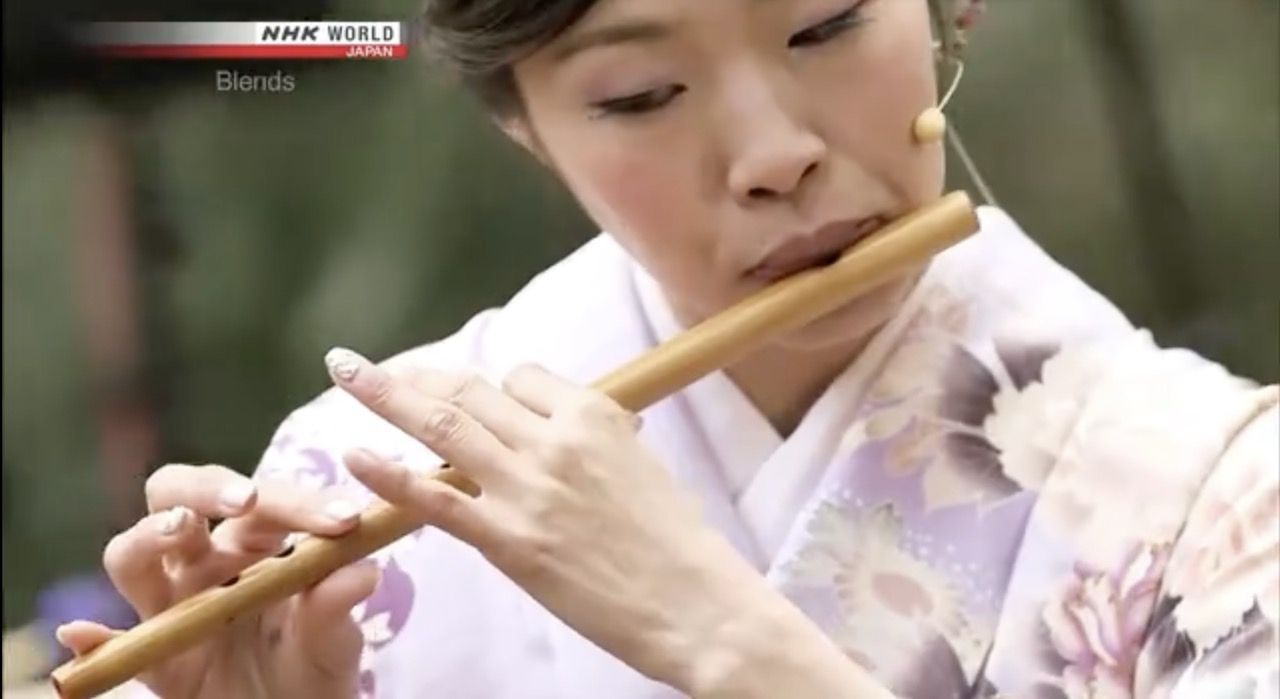
The first time I heard Sarah Akiyoshi was on an NHK World performance of Stevie Wonder's "Isn't She Lovely," arranged for kagurabue and shinobue. I did not remember the song for many years. I remembered the sound.
It was brilliant, devastatingly beautiful, and ancient. It had a clarity that cut through everything else, a presence that made the television feel alive. Memory preserved the timbre, not the repertoire. And I knew immediately, with the kind of certainty that needs no reasoning, that no sample library could give me what I was hearing.
The film I was writing for showed two figures on a cliff above a roaring sea. One was a woman, the other a man. They were samurai, facing each other, and the moment between them was as still as held breath. The image was cinematic, composed, modern in its making. But the music needed something older than cinema. Not orchestral romanticism, not the apparatus of strings and brass. The story required something more ancient, something that felt as though it had been waiting for this moment to arrive.
I began at the piano, as I always do. The main melody came quietly, simply, nothing more than itself. Then came the thinking about orchestration: strings for atmosphere, wind for distance, texture underneath the melodic line. I was working in Kontakt, building libraries and combinations, notation software translating intention into notation. I was constructing the landscape where the film would live. It was precise, controllable, exactly the kind of work that technology was designed to support.
But when I reached the moment where the shinobue needed to enter, I stopped. I knew what would happen if I tried to program it: the notes would be there, mechanically accurate, played at the exact velocities and timings I specified. Every pitch would be correct. And that instrument would be flattened, compressed, reduced to the data that created it. The notes could be reproduced by MIDI. The breath could not. The expressivity, the attack, the fragility between pitches, the silence surrounding the sound, the way an acoustic instrument exists not just as a line of notes but as a presence in space and time, all of that belonged to a player, not a keyboard.
I did not find Sarah by searching. She arrived through another film.
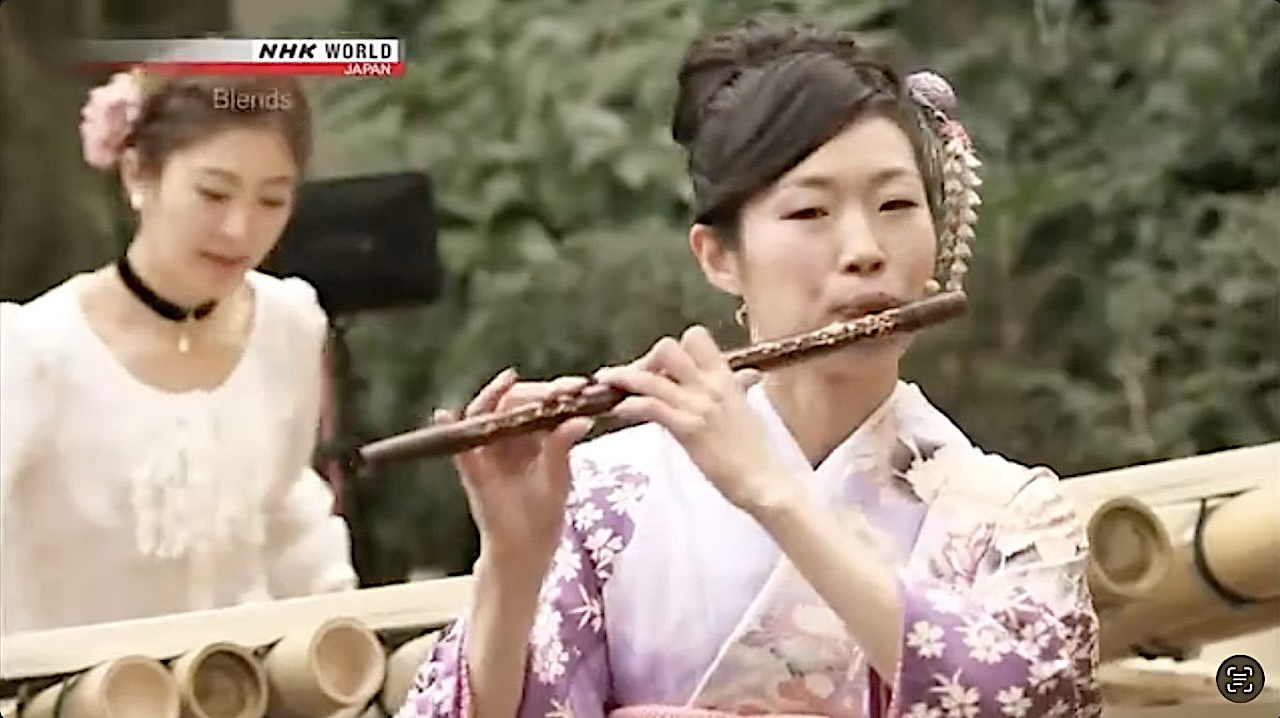
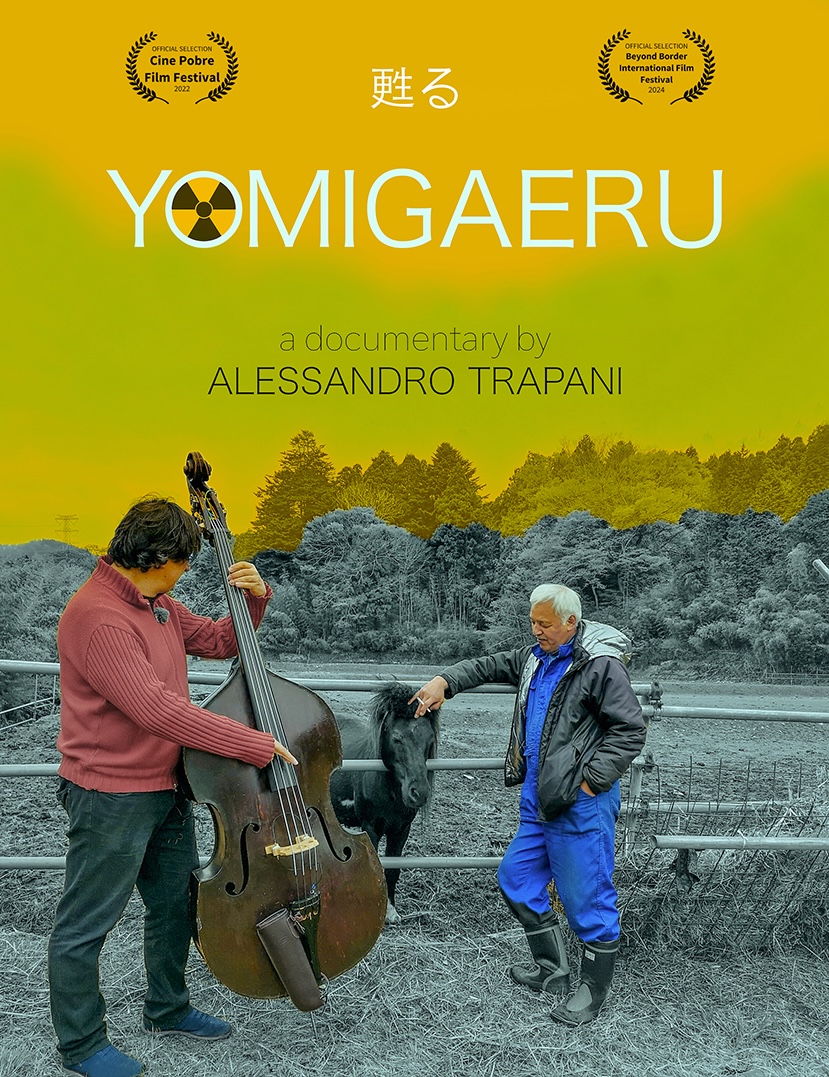
Alessandro Trapani was making a documentary about Japan called Yomigaeru, following an Italian jazz bassist traveling to Fukushima in solidarity with communities living in the aftermath of the disaster. The title means "to come back to life." I was working with him on the film, designing the poster and later mixing the documentary, when he showed me a performance from the NHK Blends series by a Japanese musician named Sarah Akiyoshi, who was then performing under the name Koto. I did not realize then that the film would also revive a sound that would eventually become part of my own music.
He introduced us. Sarah told me she played shinobue and kagurabue. I had originally wanted a shakuhachi, but we decided to build the piece around the instrument she knew intimately. The shinobue has a different voice from the shakuhachi, higher and more penetrating, and for the atmosphere of the cliff, that darker, more cutting tone was the right one. That decision came out of the conversation, not from the score.
She said yes. That is the moment that matters, more than any other in this process. Not that she answered, but that she agreed. Yomigaeru was itself about music crossing distance, an Italian bassist bringing his instrument to a landscape still marked by disaster, and that project eventually led Alessandro to Sarah, and Sarah's sound eventually found its way into this film. The melody traveled through a network of relationships before it became itself.
When the recording arrived, the piece stopped being something I had composed and began being something that was inhabited. The shinobue did not decorate the score. It changed what the score was. It altered the emotional temperature of the entire work. It introduced history into a fictional landscape. Listening to it, I realized that this melody had always existed in the presence of history, that asking for it to be played on this instrument meant asking for the story to be rooted in something deeper than image and camera and drama. A woman and a man on a cliff. The wind between them. The sea below. And underneath it all, in the center of it all, the breath and knowledge of someone who learned to play an instrument that has been played for centuries in a tradition I do not belong to.
The most important decision I made in creating this piece was not a decision about a chord, or an orchestration, or a tempo marking. It was recognizing the moment when my own technical ability became insufficient. When I understood that something needs to pass through another human being before it becomes itself. That collaboration is not a luxury or an option, it is sometimes the only way to achieve what you are reaching for. It is a conversation across distance, across cultures, across differences. And it begins with the humility of knowing what you cannot do alone.
The cliff was imaginary. The wind was imagined. But the breath inside the shinobue was real, and it was that breath that made the silence between the two figures believable.